
Dust source
What process creates the contaminant, what material is involved and how consistently is it generated?
Local extraction and dust-control systems for grinding, sanding, fabrication and welding-related work areas across Gauteng.
Send the essentials now. Our team can continue with photos and technical details on WhatsApp.
Grinding and fabrication work can create airborne particulate close to the operator. Source capture, extraction arms or hoods, local ducting and suitable filtration can help contain contaminants before they spread through the workshop. Welding fume and hazardous metal dust require material-specific assessment.
Our work can include source-capture connections, ducting, collector or filter integration, extraction fans, system alterations, repairs and maintenance. We use the actual site layout and process information to decide what needs attention rather than treating every dust problem as an equipment-replacement job.
Grinding and fabrication tasks may move between benches or components. Capture arrangements need to match the real working position so the contaminant is drawn away before it spreads across the workshop.
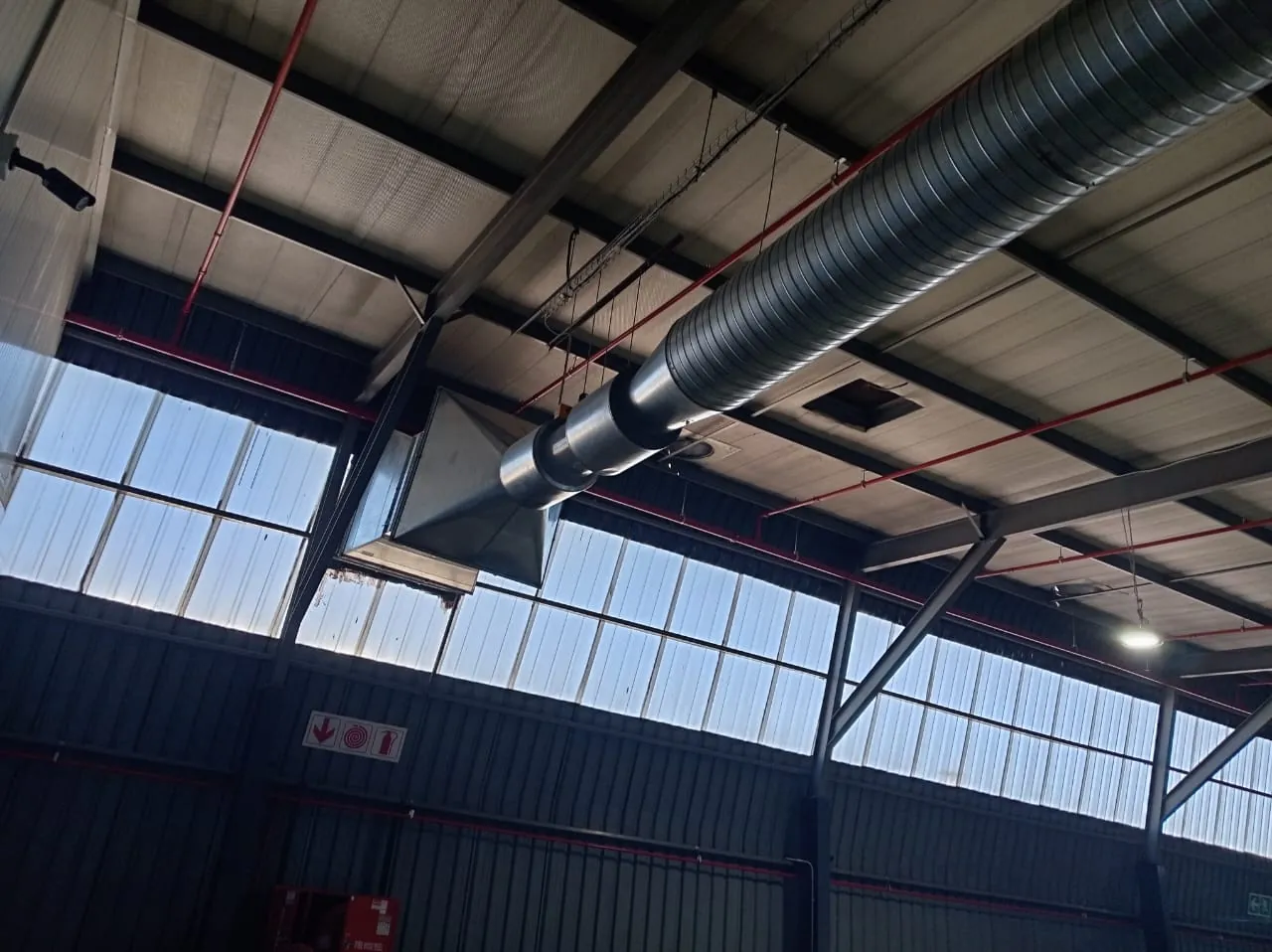
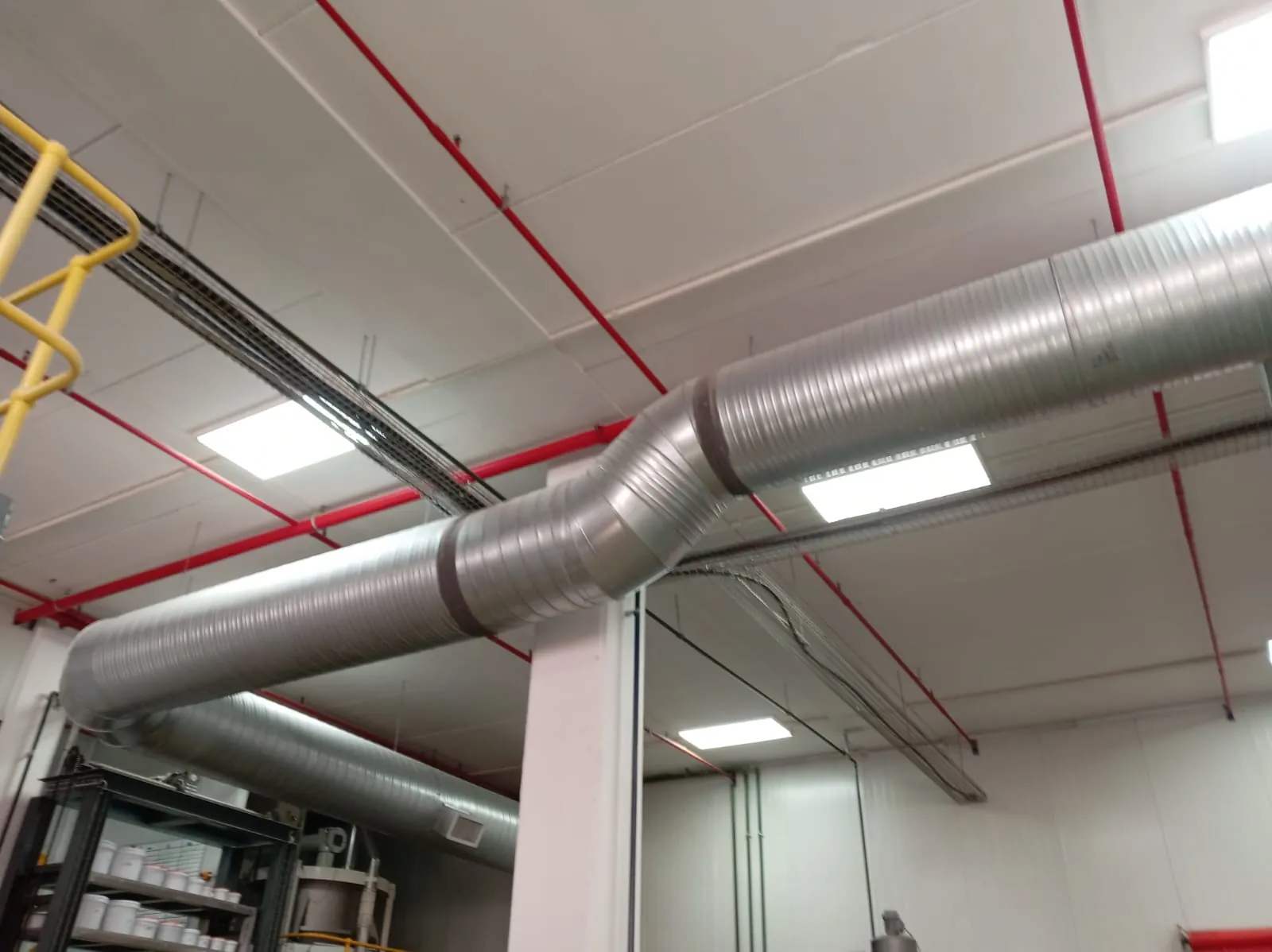
Dust extraction performance depends on the complete route from the process to the final air-handling point. A strong fan cannot rescue every poor capture point, and a new collector cannot fix every blocked, leaking or badly altered duct network.
Different metals, coatings and consumables can change the hazard profile. Welding fume and some metal dusts require specialist exposure and safety assessment. We do not assume a general dust collector is appropriate for every fabrication process.
What process creates the contaminant, what material is involved and how consistently is it generated?
Can dust be captured at the machine, enclosure, hood or workstation before it disperses into the room?
Are branches, transitions, bends and mains arranged to move the extracted air without avoidable restrictions or leaks?
Is the filtration arrangement suitable for the actual dust loading, material and maintenance pattern?
Does the fan arrangement suit the system resistance and operating pattern, and are obvious motor/control faults ruled out?
Can the system be serviced, and can likely future machine or branch changes be accommodated without rebuilding everything?
Send the process, dust material, number of capture points, existing equipment, operating hours and clear photos of the work area. If you have machine outlet sizes, existing collector details or maintenance history, include those too. Site measurements are still important, but good initial information helps narrow the assessment.
Our industrial extraction work includes long duct runs, branch connections, fabricated transitions, collector connections and system alterations for factories, workshops, warehouses and production facilities.
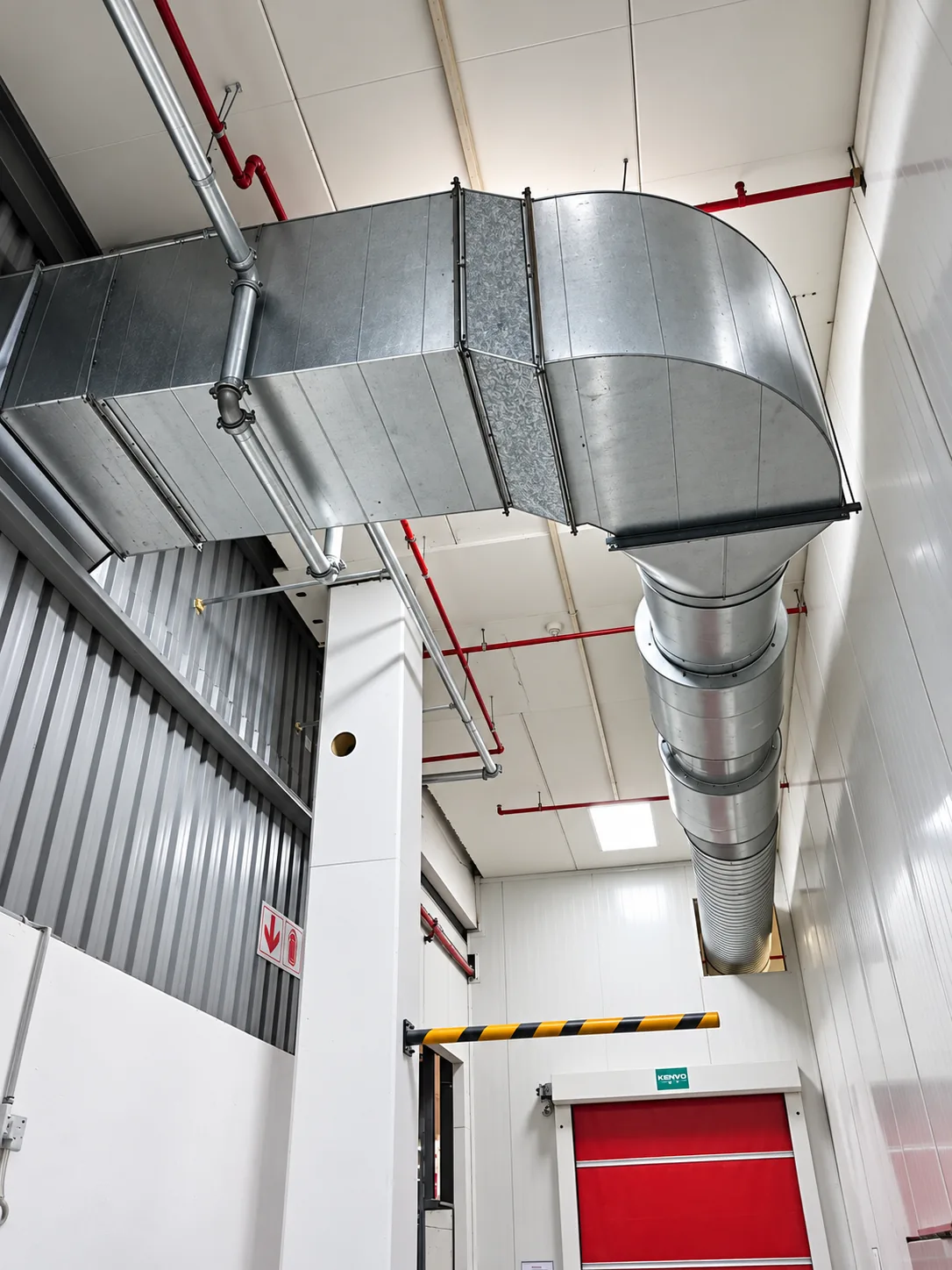
We select the dust collector, filtration method, duct arrangement and safety controls around the actual process, material, airflow duty and operating conditions on site.